Aging in Place Checklist: What to Review Before a Parent Needs Help
A practical aging in place checklist for families reviewing home layout, fall risk, emergency contacts, medication routines, and medical alert needs.
Affiliate disclosure
SafeAtHomeHub may earn a commission when you use some provider links. You do not pay more, and commissions do not buy a ranking or positive review.
How we handle commercial relationships
Comparisons follow published decision criteria. We do not accept paid placement or compensation in exchange for favorable coverage.
Read the full affiliate disclosure and editorial guidelines.
On This Page
- Start with daily routines
- Room-by-room safety review
- Emergency and contact plan
- Medical alert decision points
- What to document
- When to bring in help
Quick Answer
An aging in place checklist helps families review home safety, mobility, fall risk, emergency contacts, medication routines, bathroom hazards, lighting, and whether a medical alert system should be compared.
Start with the rooms and routines that create the most risk: bathrooms, stairs, nighttime movement, medication timing, and what happens if no one answers the phone.
Use this as a planning tool, then confirm medical, home modification, and emergency-response decisions with qualified professionals.
On This Page
- Start with daily routines
- Room-by-room safety review
- Emergency and contact plan
- Medical alert decision points
- What to document
- When to bring in help
An aging in place checklist is useful before a family feels forced into a rushed decision. The best time to review home safety is usually before a fall, hospital visit, medication issue, or emergency call exposes the weak spots.
This guide gives families a practical first pass. It is not a medical assessment, emergency plan, or construction recommendation. It is a way to organize the questions that should be answered before comparing products or calling providers.
Start with daily routines
Begin with what actually happens during a normal week. A home can look safe during a short visit and still create problems during the routines that matter most.
Write down:
- when the senior wakes up and goes to bed;
- whether they get up at night;
- how often they shower or bathe alone;
- whether they cook, use stairs, walk outside, or drive;
- whether they remember medication timing without help;
- whether they carry a phone consistently;
- who checks in, how often, and by what method.
The goal is to find the moments where a small problem could become a big one because no one notices quickly.
Room-by-room safety review
Walk through the home slowly. Look for hazards, but also look for friction: areas where the person has started avoiding a room, bracing on furniture, skipping showers, leaving lights off, or carrying too many things at once.
For bathrooms, review:
- whether the floor becomes slippery;
- whether the person has something stable to hold near the toilet and shower;
- whether towels, rugs, and cords create trip points;
- whether bathing requires stepping over a high edge;
- whether the person can call for help from the bathroom.
For bedrooms and hallways, review:
- nighttime lighting;
- rug edges;
- clear walking paths;
- access to glasses, phone, walker, cane, or pendant;
- whether the person can get help after a fall beside the bed.
For kitchens and living areas, review:
- frequently used items stored too high or too low;
- chairs that slide or tip;
- cluttered walkways;
- cords near walking paths;
- whether the person climbs on stools.
Emergency and contact plan
Many families focus on the device first. The better order is to decide what should happen when something goes wrong.
Write down:
- primary emergency contact;
- backup emergency contact;
- nearby person with access to the home;
- preferred hospital or doctor for non-emergency follow-up;
- lockbox, gate, building, or pet instructions if responders need access;
- medications, allergies, and key conditions that should be documented.
Then ask a harder question: if the senior falls and cannot reach a phone, how would anyone know?
That question is often what moves a family from a general home-safety checklist into comparing medical alert systems, fall detection, caregiver alerts, or a more formal care plan.
Medical alert decision points
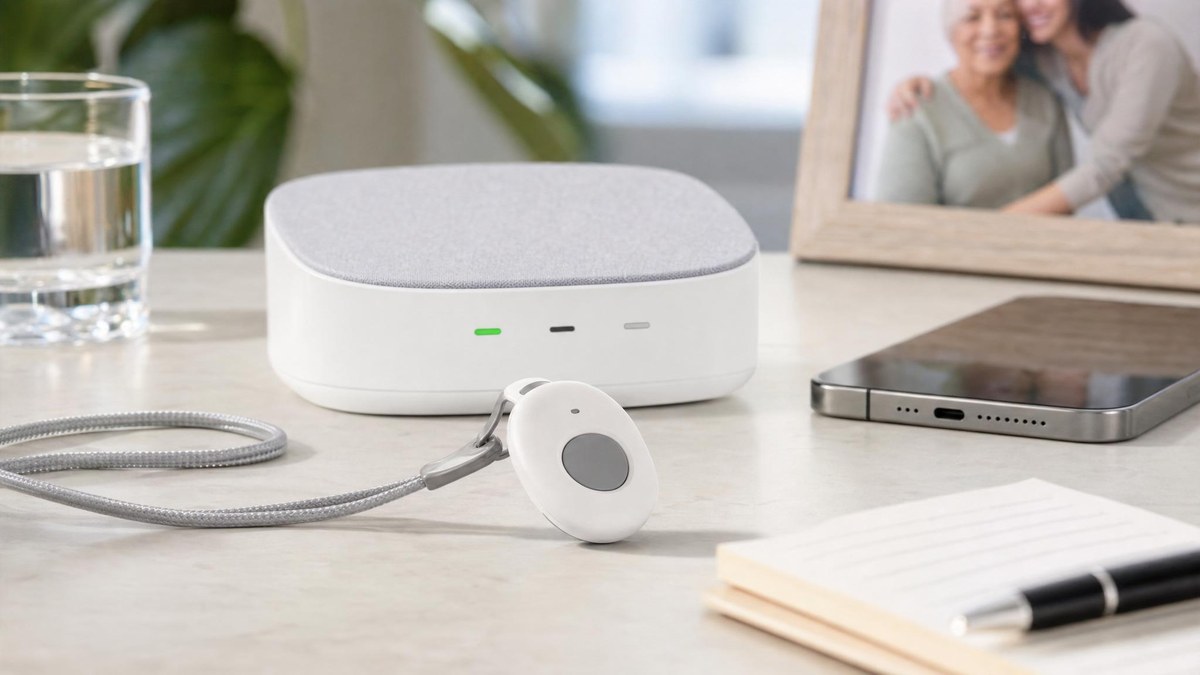
A medical alert system is not the answer for every family, but it belongs in the review when the senior lives alone, spends time alone, has fall-risk concerns, or does not reliably carry a phone.
Use these decision points:
- Home-only vs mobile: does the person mostly need help inside the home, or while running errands and walking outside?
- Wearability: would they actually wear a pendant or wrist button?
- Fall detection: is the family worried about falls where the person may not press a button?
- Contacts: who should the monitoring center call and in what order?
- Testing: who will help test the system and keep contact details current?
- Cost: what is the total monthly and upfront cost for the setup the family would actually use?
For product decisions, start with grab bars for bathroom safety, automatic pill dispensers, and medical alert watches. For a provider-by-provider starting point, use the best medical alert systems comparison after the family checklist is complete.
What to document
Create one shared note or printed sheet with the details that should not live in one person’s memory.
Include:
- Emergency contacts and backups.
- Home access notes.
- Medication list location.
- Doctor or care-team contact.
- Device, pendant, phone, or watch charging routine.
- Monthly review date for safety, costs, and whether the plan still fits.
If multiple adult children or caregivers are involved, decide who owns updates. A stale contact list can make even a good alert setup weaker.
When to bring in help
Bring in qualified help when there are recent falls, confusion, new mobility changes, medication problems, unsafe bathroom movement, wandering concerns, or signs that the senior is hiding difficulty.
This checklist can help a family prepare for that conversation, but it should not replace professional advice. Treat it as a practical organizing tool: identify the weak spots, document the handoff, compare the right products, and verify anything safety-critical before relying on it.
Related Next Reads
Continue from the guide into a higher-intent page.
Read more →Continue from the guide into a higher-intent page.
Read more →Continue from the guide into a higher-intent page.
Read more →Continue from the guide into a higher-intent page.
Read more →Continue from the guide into a higher-intent page.
Read more →Continue from the guide into a higher-intent page.
Read more →Continue from the guide into a higher-intent page.
Read more →How we evaluate this page
- Reader fit and practical decision usefulness
- Pricing clarity and need for direct recheck
- Safety, support, cancellation, and provider transparency
- Internal comparison value against close alternatives
Before enrolling: Confirm the provider's current pricing, contract, cancellation, equipment, and optional-service terms directly.
Use this guide as a family decision aid
Start with routine. Home-only and mobile systems solve different problems.
Confirm current terms. Ask about equipment fees, cancellation, fall detection, and spouse coverage.
Test the handoff. Make sure the person will wear the device and caregivers understand alerts and access.